Awards & Award Lectures

Celebrating Excellence in Chemistry

At the heart of the 10th EuChemS Chemistry Congress (ECC10) lies a deep commitment to recognizing scientific brilliance. We are honored to award prizes to several distinguished chemists whose work has fundamentally shaped the landscape of our discipline.

We invite you to join us in Antwerp to celebrate these visionaries. Beyond the ceremony, these awards culminate in our special Award Lectures — a highlight of the scientific program. This is your unique opportunity to hear directly from the laureates as they share their groundbreaking discoveries, personal journeys, and vision for the future of chemistry.

Watch this page: The list of honorees is growing. Stay tuned as we announce more prestigious award winners and schedule their must-see lectures in the coming months.
EuChemS Gold Medal Award

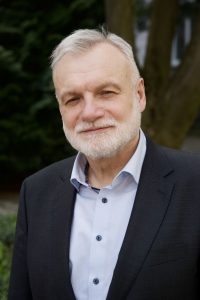
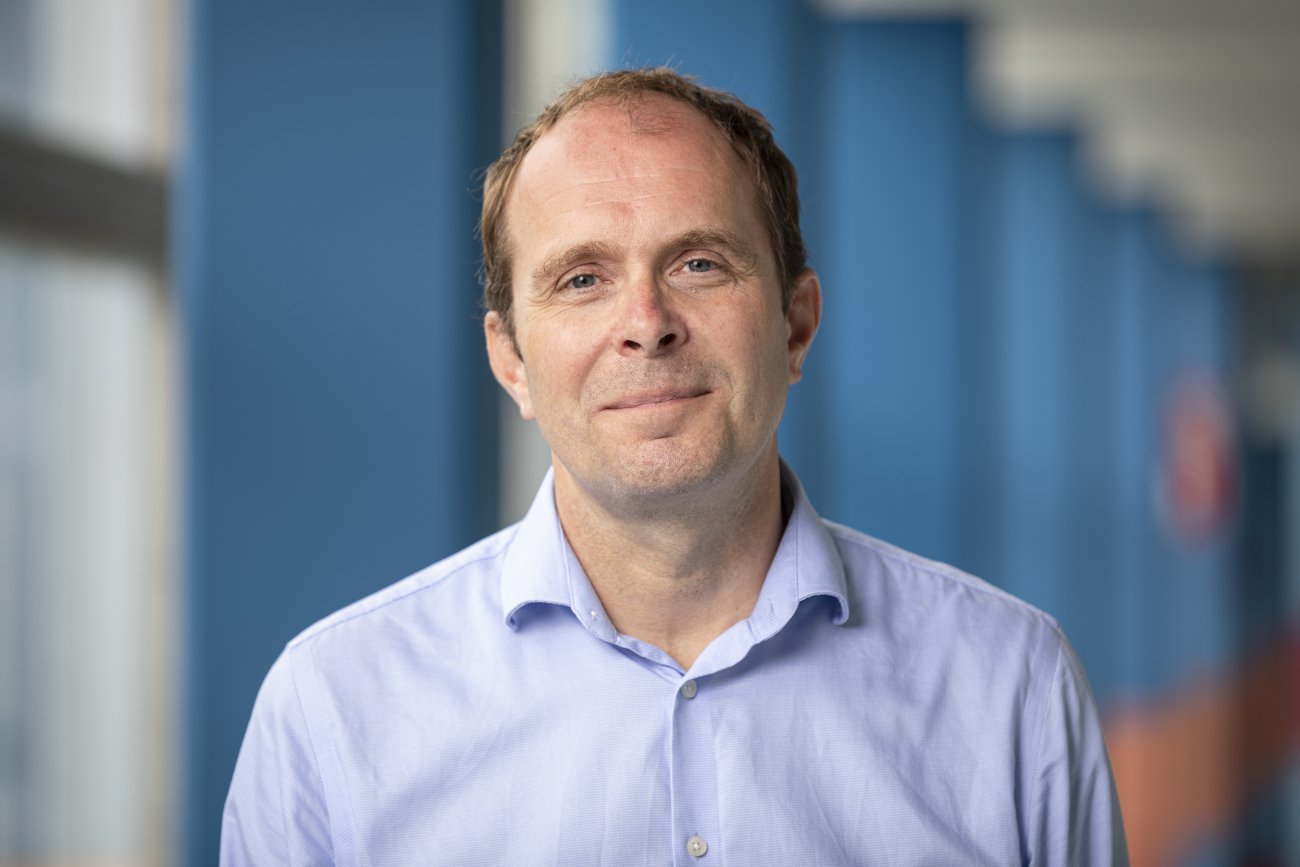
Marc Koper

Marc Koper is Professor of Surface Chemistry and Catalysis at Leiden University, The Netherlands. He received his PhD degree (1994) from Utrecht University (The Netherlands) with a thesis on nonlinear dynamics and oscillations in electrochemistry. He was an EU Marie Curie postdoctoral fellow with Professor Wolfgang Schmickler at the University of Ulm (Germany) and a Fellow of Royal Netherlands Academy of Arts and Sciences (KNAW) at Eindhoven University of Technology, before moving to Leiden University in 2005.

His research in Leiden focuses on fundamental aspects of electrocatalysis, theoretical and computational electrochemistry, and electrochemical surface science, in relation to renewable energy and chemistry. He has received various national and international awards, among which the Spinoza Prize of the Dutch Research Council (2021), the Allen J. Bard Award for Electrochemical Science of The Electrochemical Society (2020), the Netherlands Catalysis and Chemistry Award (2019), and the Faraday Medal (2017) from the Royal Society of Chemistry. In 2021-2022, he was President of the International Society of Electrochemistry.

Title talk: Molecular mechanisms of water electrolysis: how to make green hydrogen

More information

EuChemS Lecture Award

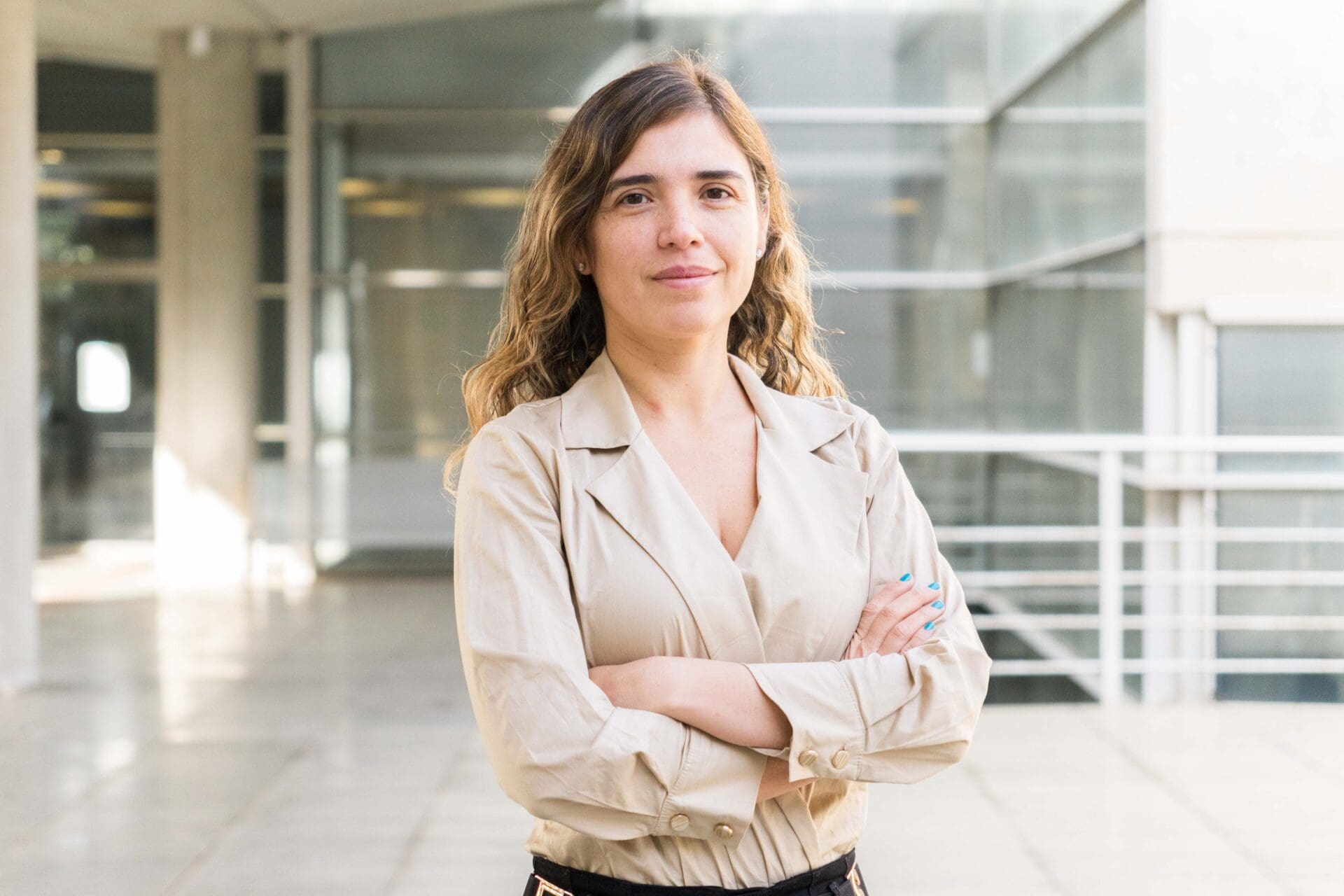
2024 Award Winner: Maria Cuartero

Maria Cuartero began her independent research career in 2018 as a Marie Curie Fellow at the Royal Institute of Technology (KTH) in Sweden. In 2020, she was appointed Assistant Professor and received both the Swedish VR Starting Grant and the ERC Starting Grant, which helped to further establish her work in analytical chemistry. She currently holds the position of Full Professor at UCAM (Spain) and serves as Associate Professor at KTH. Maria Cuartero leads two research teams that collaborate on various national and European projects. Together, they work on a broad range of topics, with around 30 researchers at different career stages.

Her research in ion sensing has received recognition within the scientific community, particularly for its contributions to ion-selective electrode development and their practical applications. She has contributed to approximately 120 peer-reviewed publications, many of which appear in journals such as Analytical Chemistry (ACS), Angewandte Chemie Int. Ed., and ACS Sensors. Notably, she has served as corresponding author on over 55 papers, with a significant portion published in recent years.

Her work includes advances in thin-layer concepts for voltammetric ion-selective electrodes and explores key aspects of (bio)chemical sensor development, including miniaturisation and improvements in sensitivity and portability.

2023 Award Winner: Katherine Villa Gomez

Katherine Villa received the 2023 EuChemS Lecture Award in recognition of her achievements and excellent research focused on using light to induce chemical reactions, utilizing affordable and nanostructured materials, to address environmental and energy-related challenges. In addition, she is one of the inventors of a patent for a multistage portable device for micromotor-assisted water decontamination.

Katherine Villa leads a research group at the Institute of Chemical Research of Catalonia (ICIQ), focused on developing advanced photocatalysts and photoactive self-propelled micro/nanomotors for applications in the environmental field, generation of solar fuels, and energy. She is the recipient of the ERC Starting Grant 2022 for her PhotoSwim project alongside numerous other prestigious recognitions, including the BIST-2021 Mother of Science Award in recognition of her career as a mother and scientist as well as her membership in the platform of Scientists and Innovators by the Spanish Ministry of Science and Innovation.

Dr. Villa is highly committed to training the next generation of scientists. Her passion is evidenced by her efforts to prepare workshops, her active participation in various outreach programs, and her enthusiasm to mentor and supervise master’s students, doctoral students, and postdocs.

Title Talk: Photocatalytic Micromotors as Programmable Active Materials

More information

EuChemS Industry Innovation Award

The EuChemS Industry Innovation Award honours outstanding achievements by researchers or teams of researchers working for industrial companies in the field of chemistry, or jointly by research teams from academia and/or from other research institutions.

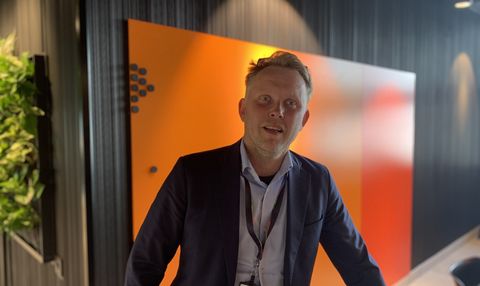
2024 Award Winner: Magnus J. Johansson

As Senior Principal Scientist in Early CVRM Medicinal Chemistry at AstraZeneca Gothenburg, Magnus J. Johansson blends precision catalysis with sustainability to accelerate drug discovery. He embeds green chemistry at every turn—PMI targets, solvent selection, and full life‑cycle assessment— and champions catalytic, atom‑economical routes to streamline the journey from idea to candidate. A specialist in transition‑metal catalysis, his work spans C–H activation, photoredox, biocatalysis, and predictive chemistry in  late‑stage diversification.

Educated in Sweden (MSc, University of Gothenburg; PhD, Chalmers) with research chapters at UC Berkeley and Harvard University, he now leads global synthesis strategy, mentors PhDs/postdocs, serves as Docent at Stockholm University, and collaborates widely across Swedish and international universities. Additionally, he contributes on the boards of SAFECHEM and the Swedish Chemical Society (organic chemistry), advancing safer, smarter molecule‑making across the field.

More information

2026 IUPAC-Soong Prize for Sustainable Chemistry

The IUPAC-Soong Prize for Sustainable Chemistry is a high-profile prize awarded annually to an outstanding scientist for a breakthrough or conceptual advance, highlighting the discovery rather than the laureate’s luminous career.

The IUPAC-Soong Prize, established through a generous endowment by LITEON founder Raymond Soong, recognizes breakthroughs in sustainable chemistry. This initiative aims to address global sustainability challenges by uniting academia, industry, and society. There are no restrictions on the candidate’s background, affiliation, identity, and opinions. The Prize laureate will receive a certificate, a medal, a monetary award of $30,000 (USD), and travel expenses to reach the prize ceremony. In addition to the prize ceremony, the awardee will be invited to present a lecture at the National Taiwan University within two years of receiving the award. Self-nomination is not allowed.

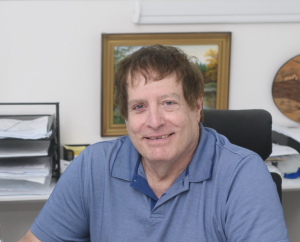
2026 Award Winner: Ronny Neumann

The International Union of Pure and Applied Chemistry (IUPAC) has awarded the 2026 IUPAC–Soong Prize for Sustainable Chemistry to Professor Ronny Neumann of the Weizmann Institute of Science, Israel, in recognition of his pioneering contributions to green and sustainable chemistry and his leadership in developing electrocatalytic production of ammonia from water and air at a low voltage.

Title talk: Small molecule activation by electrocatalysis: Reduction of nitrogen to ammonia and valorization of carbon dioxide.

More information

August Wilhelm von Hofmann Medal of the GDCh

The GDCh awards the August Wilhelm Hofmann Commemorative Medal for special services in chemistry to foreign chemists or to German personalities who are not chemists but have achieved great things for chemistry. The prize has a long tradition and was established in 1902 by the predecessor society, the German Chemical Society. The Society honoured AW v. Hofmann (1818-1892) by issusing the Medal in his honour. He was the founder and longtime President of the German Chemical Society and had previously worked successfully in England for 20 years. There, in Britian, he was President of the Chemical Society.

2026 Awardee: TBD

The 2026 awardee, to present at ECC10, is still to be announced.